
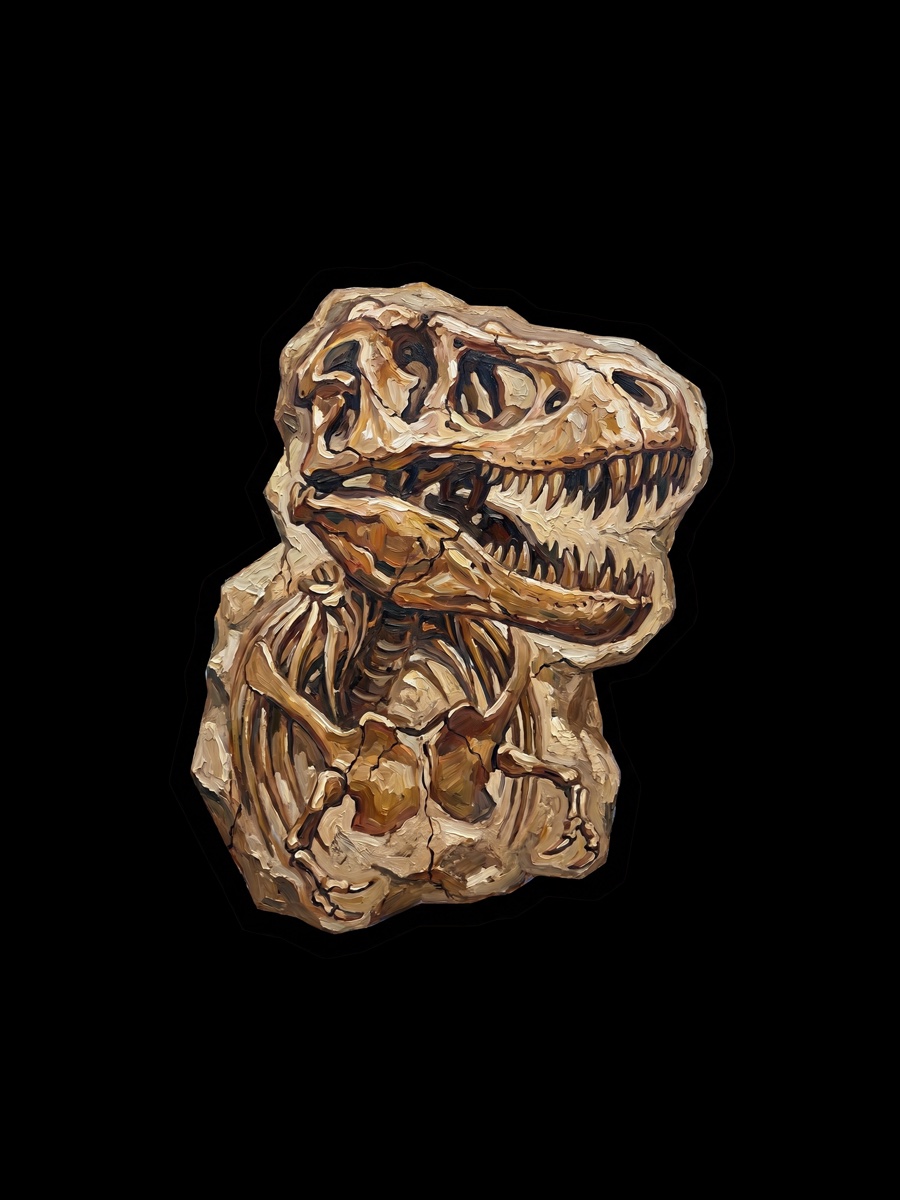
Apex the Stegosaurus Turned Natural History Into an Asset Class
How a Stegosaurus named Apex became the most valuable fossil ever sold at auction, and turned natural history into a trophy market.
Before Apex became a $44.6 million fossil, before it was framed as the most complete Stegosaurus ever sold, before it entered the orbit of billionaires and auction houses, it was already something much more ordinary in geological terms: buried bone in sediment that had held its position for millions of years.
Apex was discovered in Colorado in 2022. What mattered immediately was not narrative, but preservation. This was a Stegosaurus skeleton recovered at a scale and completeness level that is rare in paleontology, where most specimens are partial, distorted, or heavily reconstructed.
It was not symbolic at first. It was material.
When the Bidding Went Prehistoric
On July 17, 2024, Apex sold at Sotheby’s New York for $44.6 million.
The result did not just exceed the estimate though it separated the specimen from the pricing framework used to evaluate it. In auction terms, this was not simply a strong sale. It was a category break. Bidding was not driven solely by scientific valuation or comparative fossil sales. It reflected competition over a museum-scale object with both display and prestige potential.
The fossil did not change. But the market around the fossils have changed the fact that Apex was not only a pile of bones.
Why Apex Moved Beyond Typical Fossil Pricing
Apex did not become a million dollars' worth fossil because of one quality alone. Its power came from the way several rare advantages converged in a single skeleton.
It was a Stegosaurus, one of the few dinosaurs recognizable far beyond paleontology. It had the scale to dominate a room. It was credible enough for researchers, dramatic enough for museums, and legible enough for collectors who understood instantly what they were looking at.
By the time it reached auction, the market was already prepared to treat major natural-history specimens as trophy assets. Apex simply gave bidders the clearest version of that idea: a dinosaur old enough for science, complete enough for display, and powerful enough to become a status object.
The Fossil Market Found a New Ceiling
The $44.6 million result did not mean Apex suddenly became the most important fossil on Earth. It meant the market had found a new ceiling. Before Apex, major dinosaur sales were still usually framed through museums, science, and rarity. After Apex, the conversation changed. A Stegosaurus could now enter the same competitive arena as a trophy painting, a rare Ferrari, or a record-setting card.
That is why this sale mattered. Apex was still a research object. It was still a museum candidate. It was still a piece of natural history. But after the hammer fell, it became something else too: a private-market trophy with a public price.