The 1952 Topps Mickey Mantle Made Cardboard a Trophy Asset
How a 1952 Mickey Mantle card became a $12.6 million signal that sports cards had entered the trophy-asset market.
Before the 1952 Topps Mickey Mantle became one of the most valuable cards ever sold, it was still something most people understood immediately.
A baseball card that is small enough to hold in one hand. Printed for kids that collected, traded, bent, boxed, forgotten, and rediscovered across decades of American childhood.
That is what made the $12.6 million sale so powerful. It did not require an art-history degree, a collector-car vocabulary, or a museum wall. The sale changed the hobby because it forced a larger market to take sports cards seriously.
Mickey Wasn’t the Rookie. He Was the Myth.
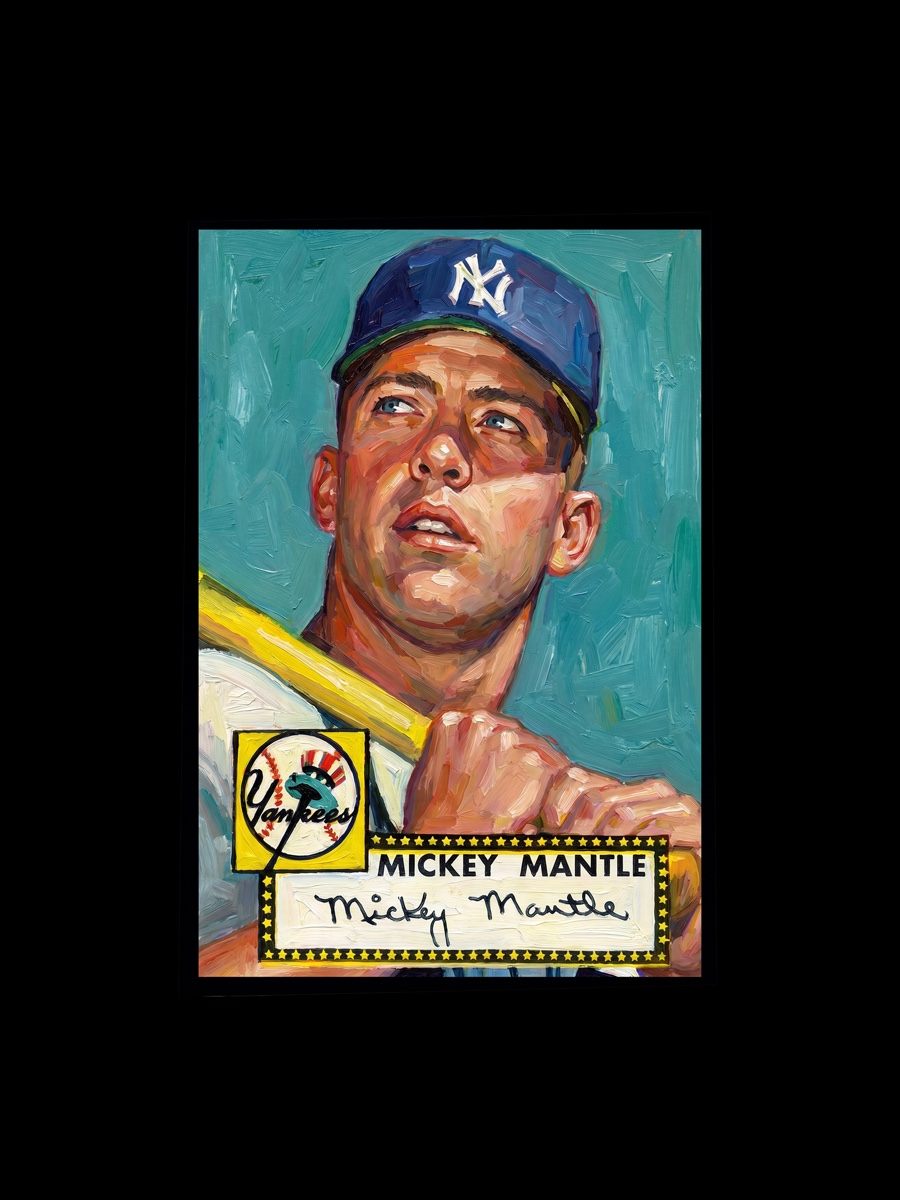
The 1952 Topps Mickey Mantle is often treated like Mantle’s rookie card, even though his true rookie card came earlier, in 1951 Bowman. That confusion almost helps explain its power.
The 1952 Topps card is not valuable only because of technical firstness. It is valuable because it became the image collectors attached to the Mantle myth: the young Yankee, the bright portrait, the postwar baseball dream, the player whose name still carries weight long after the games ended.
Cards are not priced by facts alone but, they are priced by memory and Mantle’s 1952 Topps card became the cleanest version of that memory.
Minty Fresh, Financially Terrifying
The 2022 sale was not just about any 1952 Mantle. It was about an SGC Mint+ 9.5 example, described as the finest known copy. Condition is what turns a famous card into a trophy object. Many collectors can know the card. Far fewer can compete for one of the best surviving examples. That is the difference between cultural importance and market violence.
The card had the image, the player, the era, and the brand. The grade gave it scarcity inside scarcity.
The Shoebox Wasn’t Empty
The card also carried one of the great hobby backstories. It came from the famous “Rosen Find,” a discovery tied to dealer Alan “Mr. Mint” Rosen and a group of unusually well-preserved 1952 Topps cards that had survived for decades.
That history matters because high-end collecting is not only about what the object is. It is also about where it has been.
A card with a clean origin story is easier for the market to trust. A card from a legendary find has a built-in narrative. It gives collectors something more than a slab and a grade.
Twelve Million Dollars. For Cardboard.
In August 2022, Heritage Auctions sold the 1952 Topps Mickey Mantle SGC 9.5 for $12.6 million.
The number broke through the hobby and landed in the mainstream. It was not simply the most expensive sports card sold at auction at the time. It was reported as the most expensive sports collectible ever sold at auction.
That is why the sale mattered.
A sports card had crossed into territory usually reserved for fine art, cars, historic jerseys, and other trophy assets. The object had not changed. The audience around it had.
After that sale, it became harder to dismiss cards as a niche hobby.
The market had put a public number on childhood.
The Past Got a Price Tag
The $12.6 million Mantle sale did not change what the card was. It changed what the market believed a sports card could become. The card already had the ingredients: player, image, era, condition, provenance, and myth. It was not even Mantle’s true rookie card, but that almost made the story more revealing. The market was not paying for technical firstness alone. It was paying for the version of Mantle that collectors remembered most clearly: the young Yankee, the early Topps design, the postwar baseball dream, and the piece of cardboard that became bigger than its checklist number.
The auction gave those ingredients a public price that the whole world could understand. A small piece of cardboard became one of the clearest examples of how memory, scarcity, condition, and story can turn childhood objects into serious market assets. It proved that the right card does not need to explain itself forever. Once enough people understand the myth, the price starts speaking for it.